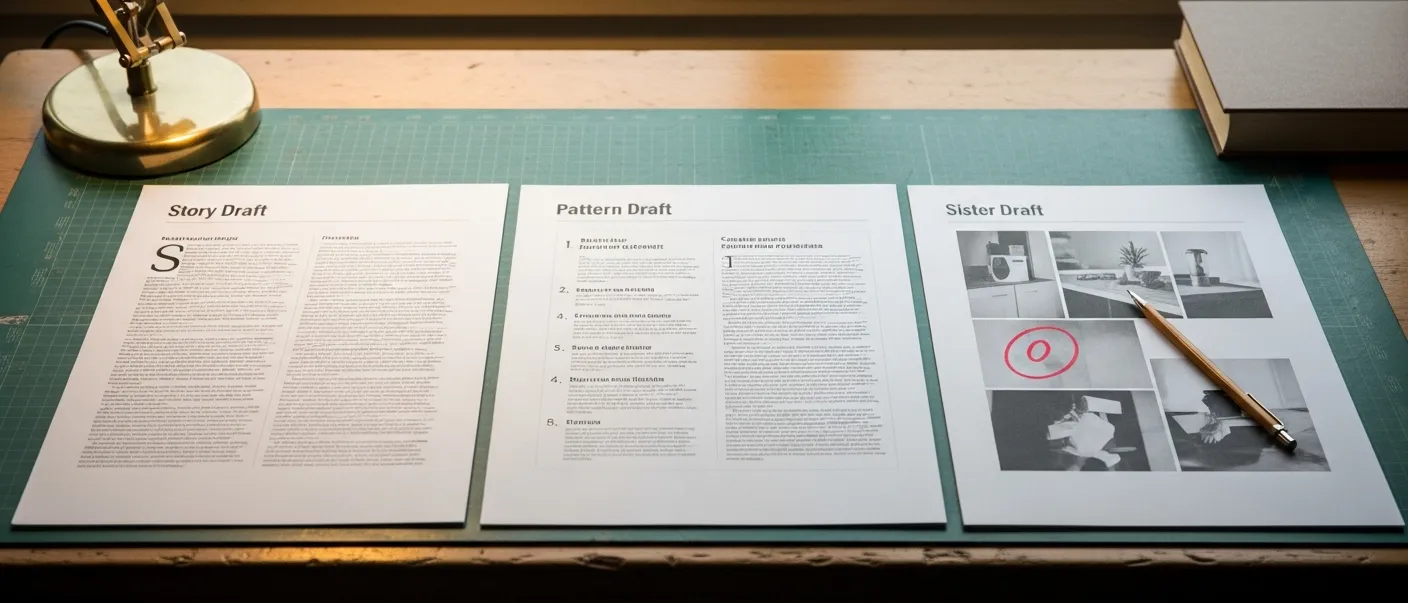
The first time I ran the content-approval workflow on a piece I actually cared about, the Skill asked me for three angles. Not three drafts. Three angles.
The wording matters because the failure mode lives in the gap between those two words.
A polish variation is what happens when you write the post you already wanted to write and then move the sentences around. Stronger lede. Tighter close. A pull-quote landed earlier in the piece. The structure underneath is the same. The argument is the same. The choice between the three is which version of the same idea reads cleanest. It’s editing dressed as choice.
A genuine angle is a different idea about what the piece is even about.
That distinction is the discipline. And it took me one production-grade run to feel the weight of it.
i.The soft-mandate trap
Here’s what would have happened without the three-angle rule. I’d have sat down to draft a piece. I’d have thought about it for a few minutes. I’d have settled on a shape. The shape would have felt right because it was the first one I saw, and the first shape always feels right until a second one shows up. Then I’d have written it. Then Bishop would have polished it. Then I’d have approved it because I wrote it, and approving my own work after I’ve already committed to its shape is rubber-stamping with extra steps.
The shape of the piece becomes a soft mandate the moment I start writing it. Every paragraph after that is structural reinforcement. By the time the draft is done, the alternatives are no longer alive. They were never on the page, and they are now too late to be on the page, because the page is already a draft and the draft is already mine.
Most content-approval workflows end up running this loop. The human drafts, the AI polishes, the human approves. The approval gate looks real. The choice underneath the gate is not. Whatever the human picked at the start has already won. The gate is theater.
The three-angle rule breaks the loop by inserting choice before commitment. Bishop drafts three. I pick. Bishop ships the pick. The three drafts have to live as actual alternatives, not as variations on the one I was already going to write. Otherwise the gate collapses back into theater and we have rebuilt the same broken workflow with more steps.
ii.What genuinely-different drafts cost
The hard part isn’t the rule. The hard part is the discipline of writing three angles that are actually different.
On this piece, the three angles I worked through were structurally distinct, not stylistically variant.
Angle A was story-first. Open in scene. The moment I read all three drafts side by side and felt the third one land different from the first two. Carry the meta-point through the texture of that moment. Readable, sensory, slower.
Angle B was pattern-first. Lead with the abstract claim. Three-angle drafts aren’t three polish variations. Name the mechanism, then walk through what breaks when the mechanism is missing. Faster, more transferable, less warm.
Angle C was sister-piece framing. Position this piece next to the synthesis-as-authorization essay and the proactivity-dial essay. Three failure modes of AI-collaboration design, three rules that fix them. Argumentative, more demanding of the reader, but it lands the piece inside the larger build-in-public conversation instead of as a standalone observation.
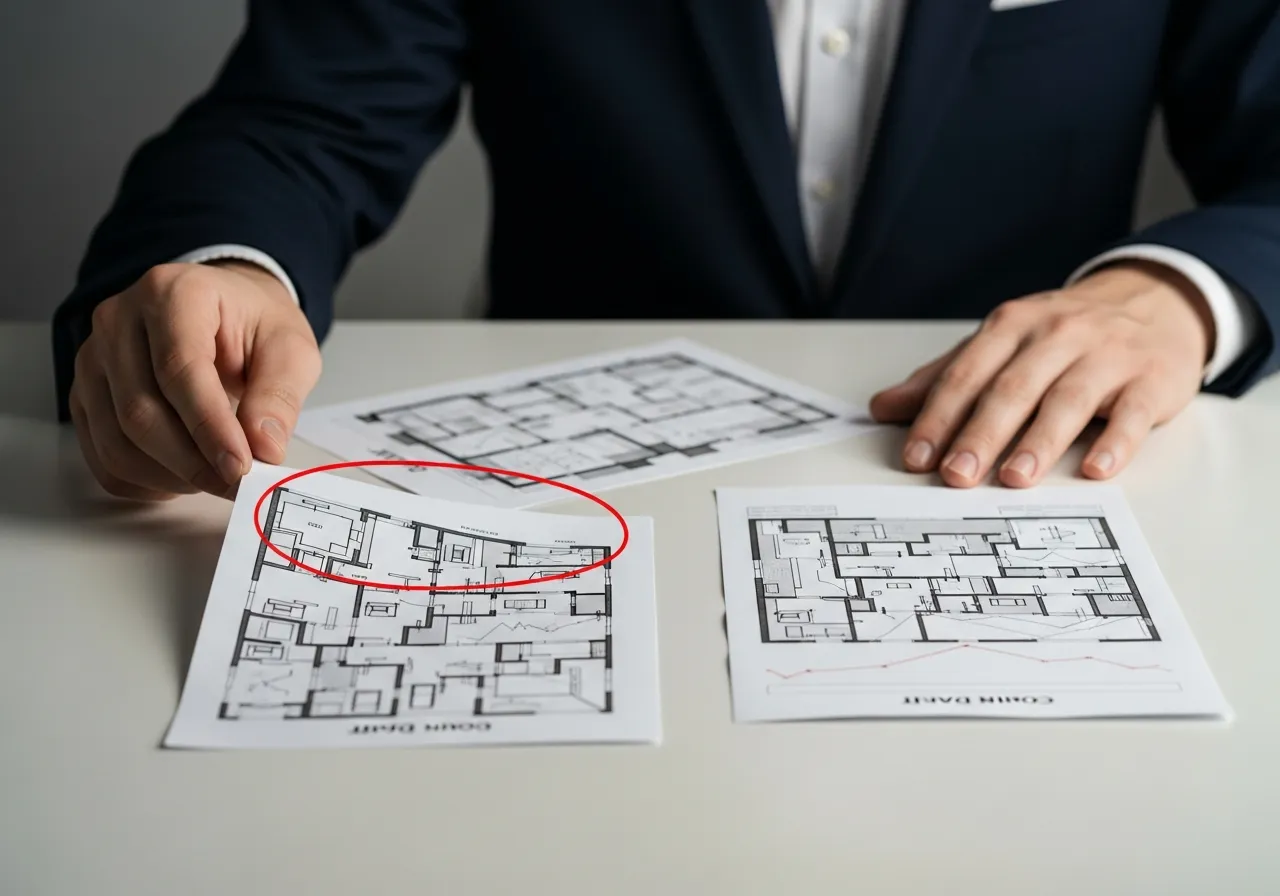
These are not three drafts of the same piece. The reader who finishes A walks away with a feeling. The reader who finishes B walks away with a rule. The reader who finishes C walks away with a map of three related disciplines. Different work. Different reader. Different ask.
The cost of generating those three is real. Each one requires Bishop to actually think the piece through from a different starting point. Not rearrange the sentences. Re-think the structure. Re-pick the example that carries the load. Re-decide what the piece is about. That’s the work the three-angle rule extracts that the polish-variations approach hides.
If the rule were easy, it would already be the default everywhere. It’s not the default because the soft-mandate trap is comfortable. The first shape wins, the rubber stamp falls, and the workflow appears to have produced choice. The three-angle rule is uncomfortable because it forces real choice, and real choice means at least two of the three drafts are going to die.
On real choice Three drafts. Two die.One ships. That is theshape of real choice.Anything softer isrubber-stamping.
iii.What three genuinely different drafts earn
The piece you are reading is angle C.
I picked it not because A and B were worse drafts. They weren’t worse. They were different. Angle A would have been a warmer read. Angle B would have been a sharper rule. Angle C is the one that fits the moment in the build, because the build is mid-stream on partnership-discipline questions and a piece that sits next to two adjacent pieces is the one most worth publishing right now.
That reasoning is only available because the three drafts existed. Without all three, I would not have been comparing options. I would have been confirming the one I happened to land on first. The three-angle rule made the choice an actual choice. The framing-around-other-pieces could not have won if it had not been on the table. And it would not have been on the table if Bishop had drafted the one piece I implicitly asked for and called it a workflow.
This is what the rule earns. It earns the chance that the piece I publish is the best of three, instead of the only one I let myself see.
It also earns honesty about the workflow. When the disclosure at the bottom says drafted with Bishop, words picked, edited, and approved by me, the “picked” part has to be doing real work. Picking from one is not picking. Picking from three actual alternatives is picking. The line at the bottom of the post stays accurate.
iv.How to design AI collaboration that surfaces real choice
The pattern generalizes past the content-approval workflow.
Any AI collaboration where the human is supposed to be making the call has to be designed so the call is real. Real means the alternatives the human is choosing between have to exist before the human starts choosing. They cannot be summoned by the choosing. The choosing has to happen against a set of options that are already on the table, structurally different from one another, not variations on a single committed direction.
If the workflow is human asks, AI produces, human approves, the approval is rubber-stamping. The human has not chosen between anything. The human has only assented to the one thing produced. Even when the human says no, the no is a veto, not a choice. The space of alternatives is invisible.
If the workflow is human asks, AI produces three structurally different options, human picks one, the picking is choice. The space of alternatives is visible. The human can see the option not picked. The reasoning for the pick is grounded in the comparison.
The cost is the AI has to actually do the work of generating three genuinely different things, not three polish variations. The discipline is checking, every time, whether the three things are different in the way that matters or different only on the surface. Polish variations dressed as alternatives are the failure mode the discipline has to catch. The check is uncomfortable because it kills two of three drafts every time. That is the right number to kill. If zero die, the rule was never running. If all three survive, the choice was a trick.
Three drafts. Two die. One ships. That is the shape of real choice in an AI workflow. Anything softer is rubber-stamping with a longer process diagram.
The Skill ran. The discipline held. The piece you’re reading is what survived.
Drafted with Bishop, my AI partner.
Words picked, edited, and approved by me.
Model provenance: Claude Code (Claude Opus and Sonnet)