That line goes at the bottom of every public thing I publish.
Blog posts. LinkedIn. X. YouTube descriptions. Newsletter sends. Anywhere the work crosses out of my workspace and lands in someone else’s feed. It’s the same line every time. Same wording. Same placement. Same scope (any post Bishop touched, no matter the topic).
It’s a rule I locked in early, before any platform required it, before any audience asked for it. The rule is: always declare.
This essay is about why I locked that rule, why I locked it before anyone made me, and what the disclosure actually buys.
i.The rule
Every public draft Bishop helped on closes with a single line of disclosure. Not a footnote. Not a tooltip. Not an icon. A plain sentence in plain prose, sitting where the reader’s eye naturally lands at the end of a piece.
The phrasing is fixed. Drafted with Bishop, my AI partner. Words picked, edited, and approved by me.
Three things that line does, in order. It names the partner. It names the workflow (drafted, edited, approved… that’s the actual sequence of how this gets made). It names who’s accountable for the final words on the page (me).
The rule has one carve-out. If I drafted something solo, with no AI in the loop, no disclosure is required. The disclosure isn’t a brand stamp. It’s a workflow signal. Bishop touched it, the line goes on. Bishop didn’t, it doesn’t.
In practice almost everything I publish gets the line. Bishop is a working partner in the way most people would describe a co-founder or an editor. The drafts run through it. The output gets shaped by it. That’s the reality the line is making visible.
ii.Why voluntary
The disclosure isn’t required. As of 2026 there’s no platform that mandates AI-authorship labels on text content. LinkedIn doesn’t. X doesn’t. Substack doesn’t. The blog publishes whatever I publish. The mandate, when it comes, will come from somewhere… and I think it’s coming, but it isn’t here yet.
I’m declaring anyway. Three reasons.
First, it’s honest. The disclosure is true. Bishop is involved. Pretending otherwise would be performing solo authorship I don’t actually have. A reader who thought every sentence came out of my head unmediated would be misreading the page. The disclosure corrects the misread before it happens.
Second, the brand thesis I’m building under is “AI is a partner. The frontier is an invitation. Earn the alignment.” That’s the through-line. If I hide the partnership, the brand contradicts itself at the byline. The post claims partnership while concealing the partner. You can’t pitch AI is a partner and then quietly file the partner under “tools I don’t talk about.” The thesis demands the disclosure.
Third (and this is the one most people skip), it’s a pre-commitment device against my own future drift. Once the rule is locked, I don’t have to decide piece-by-piece whether to disclose. I don’t have to weight “will this specific post de-rank if I label it?” against “do I want to be transparent on this specific topic?” The rule eats the decision. Every post discloses. The variable is removed. I can’t bargain with myself on a piece-by-piece basis because there’s nothing to bargain.
That third one matters more than people realize. Voluntary disclosure that depends on per-piece judgment isn’t really voluntary. It’s situational. The first time the algorithm tax shows up (the post that would have done 10x is doing 3x because the disclosure tag de-prioritized it), the temptation to drop the line on that one piece is real. And then the next piece. And then the rule isn’t a rule anymore.
The pre-commitment fixes that. Lock it once. Apply it always.
iii.Why now (the pre-regulation move)
Here’s the thing about platform-mandated disclosure. It’s almost certainly coming. The regulatory drift is one-directional. The EU AI Act already nudges this way for certain content categories. The FTC has been talking about AI-content labeling since 2023. Major platforms have started to experiment with creator-facing labels. The timeline is uncertain. The direction isn’t.
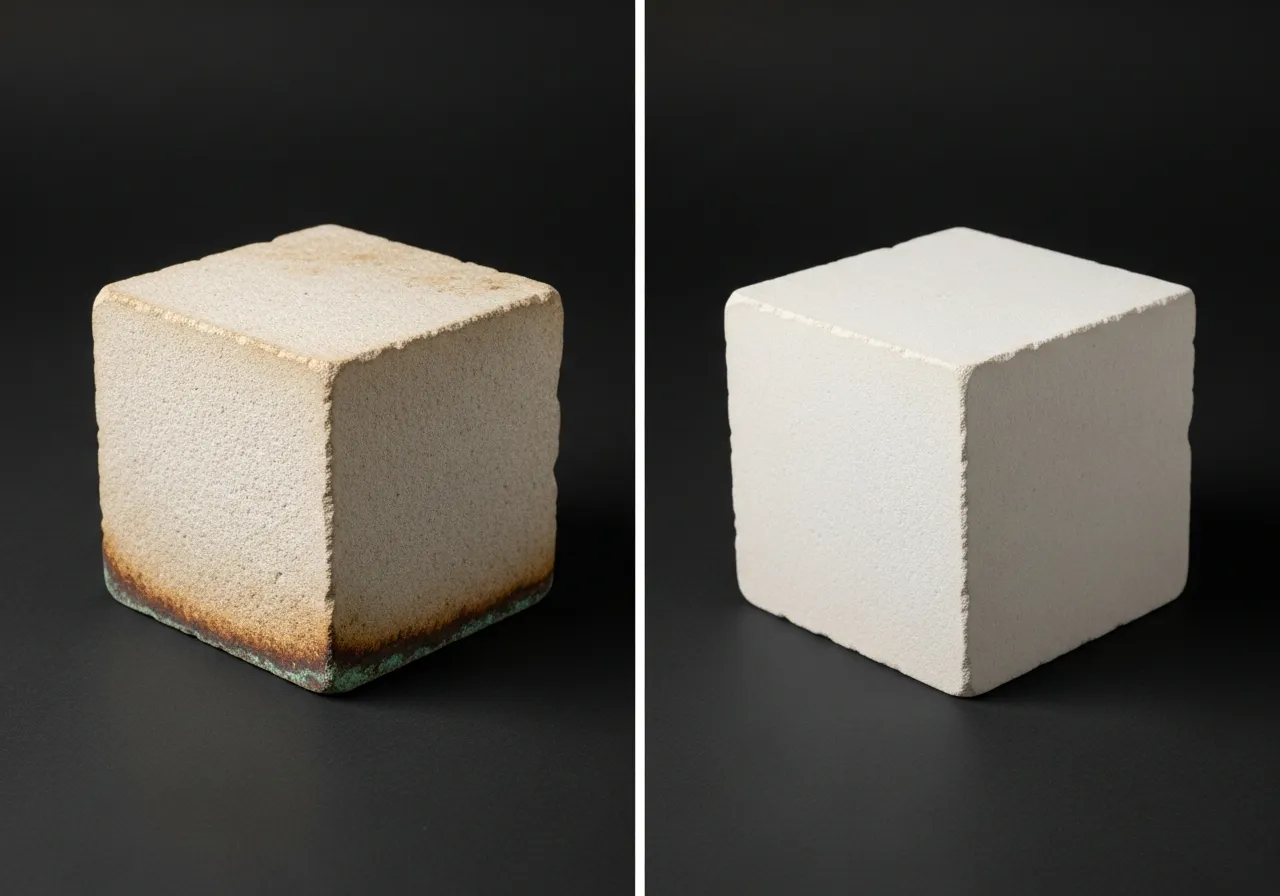
When the mandate lands, two things happen.
One, every creator who hadn’t been disclosing has to start. The disclosure suddenly appears across feeds that previously read as solo-authored, and the inferred-history shifts. Wait. How long has this person been using AI? The mandate, by being a discontinuity, generates the suspicion it was supposed to dispel.
Two, the creators who had been disclosing voluntarily look like they already knew. Because they did. The mandate doesn’t change anything about their workflow. The line at the bottom was already there. The mandate is just catching up.
That gap (between mandated-late and voluntarily-early) is the thing I’m trying to land on the right side of. Not because I’m trying to game a future regulatory event. Because the early disclosure is what I’d want regardless, and the regulation arriving validates the choice I’d already made.
Pre-regulation transparency reads differently than post-regulation transparency. One is integrity. The other is compliance. The same line on the page means different things depending on when you started writing it. I’d like the line, when the regulation lands, to read as the former.
On the line Integrity isn't a postscript.It's a build-axis.The disclosure is the contract.
iv.What the disclosure earns
The disclosure earns three things. None of them are SEO benefits or algorithm boosts. Two of them are about trust, and one is about discipline.
The trust pieces first.
The line builds direct trust with readers who care. Some readers don’t care whether AI was involved. Fine. The disclosure doesn’t hurt them; they skim past it. Some readers care a lot. For those readers, the disclosure is the difference between a post they trust and a post they don’t. The disclosure makes them right to trust the post. The absence of the disclosure (when AI was actually involved) would have made them wrong to trust it. The line lets the trust be accurate.
The line also builds indirect trust with readers who don’t yet know they care. There’s a category of reader who is currently undecided about AI in writing… open to it, suspicious of the people who hide it. The disclosure says I’m not in the category you’re suspicious of. It positions the work on the side of the readers who haven’t decided yet, by behaving the way they’d want regardless of which side they land on.
Then the discipline piece. The disclosure forces me to keep the human role real.
If Bishop drafted something, and I’m putting my name on it, the line at the bottom commits me to having actually done the picking, editing, and approving the line claims I did. Words picked, edited, and approved by me is a verifiable promise. Either I did those things, or I’m lying in the disclosure. The disclosure is the contract.
Without the line, the temptation to ship a Bishop draft with light edits is non-trivial. Especially under time pressure. The line makes that temptation visible. Putting my name above the line and the disclosure below means I either do the work the line claims I did or the line is fraudulent. Either I’m holding the standard, or the disclosure is the bigger lie than the absent disclosure would have been.
That’s a self-imposed discipline pressure I want. The line keeps me honest about my own role. If I started shipping un-edited drafts under the disclosure, the disclosure would become untrue, and I’d know it. The line is the mirror.
v.The algorithm tradeoff
I have to be honest about the cost.
The platforms that have started to algorithmically de-prioritize labeled-AI content do so quietly. There’s no public dashboard showing “this post was downranked because of the AI-content disclosure.” Distribution math gets opaque the way it always does. But the trend exists. Posts that label themselves as AI-assisted tend to under-perform comparable posts that don’t carry the label. By how much depends on the surface, the topic, the moment. Not zero.
I’ve decided I can beat the algorithm.
Not by gaming it. By being good enough at the underlying work that the disclosure-tax becomes a noise term and not a signal. If the writing is strong, the readers it earns are strong, and the strong readers don’t bounce off the disclosure. The disclosure does prune the readers who would have churned through the post without engaging anyway. That pruning is fine. Better fewer readers who actually read it than more readers who pattern-matched and scrolled.
This is a bet, and I want to name it as a bet. The bet is: the quality of the work, plus the integrity of the partnership disclosure, will compound faster than the algorithmic tax compounds against it. Over a long enough window. With a strong enough body of work.
If the bet is wrong, I lose distribution. If the bet is right, I get the readers who are actually the audience. Either way the disclosure stays. The bet doesn’t change whether I’m telling the truth.
vi.What the line actually is
The line at the bottom is the work. Not in a clever-rhetorical sense. In a literal one.
The line documents the workflow. The workflow IS the work. The work is Bishop drafting, me editing, both of us iterating, me approving. The line is the most compressed possible accurate description of how the page got here.
If I removed the line, the work wouldn’t change. The page would still exist. The reader would still read it. The difference would be that the reader wouldn’t know how the page got here, and I’d be content with them not knowing. That last part is the part I’m not content with.
So the line stays. Every post. Every surface. Every time Bishop touches it. The rule is locked. The variable is gone. The discipline runs itself.
The frontier is an invitation. Part of accepting the invitation is showing up at the door with the partner who came with me. The disclosure is how I introduce us.
Drafted with Bishop, my AI partner.
Words picked, edited, and approved by me.
Model provenance: Claude Code (Claude Opus and Sonnet)